
Records are not islands
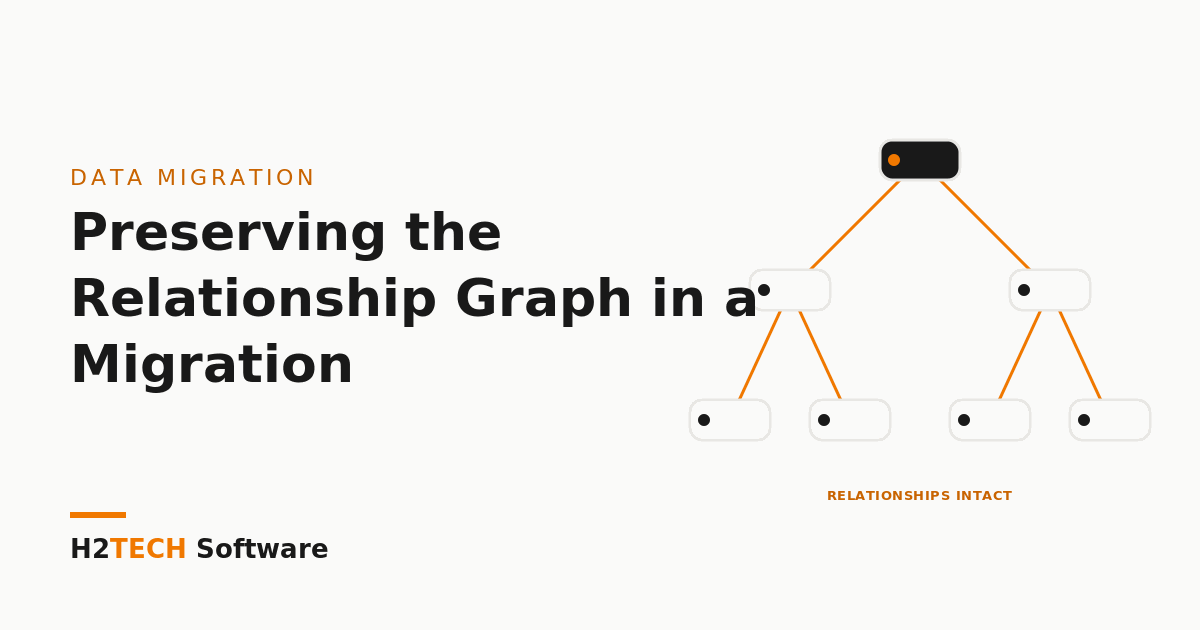
A Salesforce record is only meaningful through its relationships: the account behind a contact, the opportunity behind a quote, the parent behind a case. A migration that moves records but scrambles the lookups produces an org that looks full and is functionally broken.
Rebuilding those links by hand after the fact is slow, error-prone, and often impossible at scale.
The same holds when the target is a new data model rather than a new org. In a move from Salesforce CPQ, quote lines, subscriptions and the assets they become all depend on their parents, which is why Revenue Cloud data migration starts with mapping those relationships, not the fields.
Migrating the graph, not just the rows
iSyncSF clones records with their full relationship graph intact. Lookups, master-detail chains, and complex object hierarchies come across connected, so the org is usable on arrival rather than after a fortnight of manual repair. Because the tool is 100% Salesforce-native, data never leaves the platform during the move.
That native, relationship-aware approach is why iSyncSF sits on the AppExchange and is rated 4.82 across its reviews: it solves the part of migration that hurts.
The same engine for seeding
The capability that preserves relationships in a migration is the same one that seeds sandboxes with realistic, connected test data. Duplicate a complex hierarchy in a click and the lookups still resolve, which is exactly what you want for testing and exactly what manual data setup never gives you.
Key takeaways
- A migration that breaks lookups produces a full-looking, functionally broken org.
- iSyncSF clones records with the full relationship graph, natively, so data stays on-platform.
- The same relationship-aware engine seeds sandboxes with connected test data.