The real problem is not volume
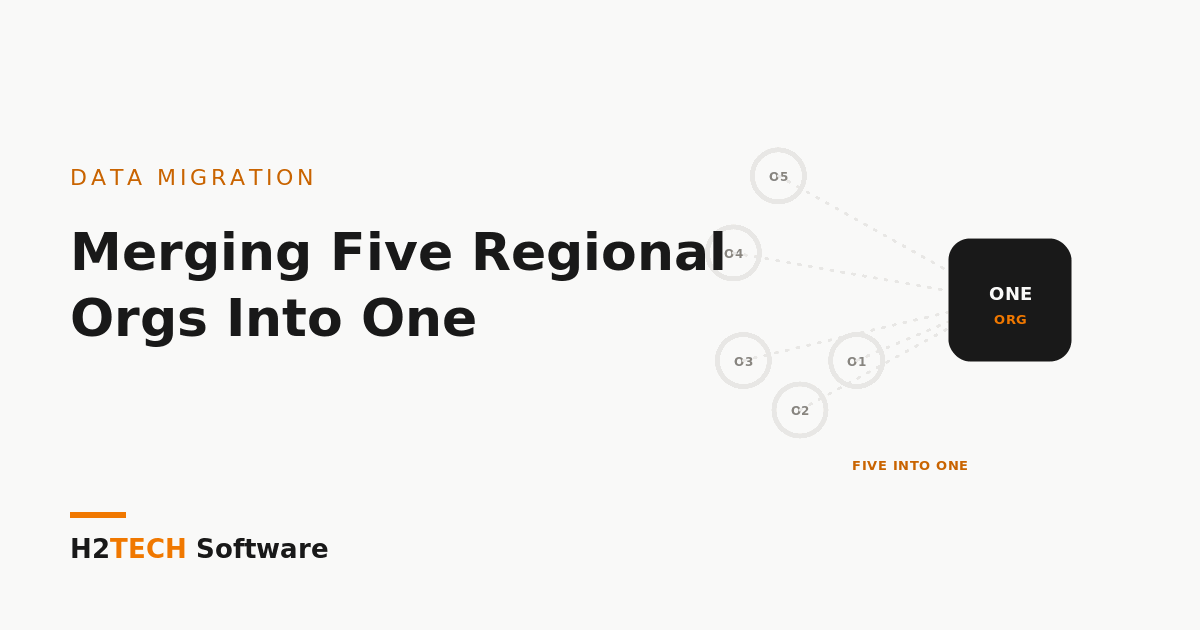
Five regional orgs accumulated through acquisition do not just have a lot of data; they have five different definitions of the same things. Different picklists, duplicated accounts, conflicting ownership, and processes that evolved apart. Merging the rows is the easy half; reconciling the meaning is the work.
Ignore that and you get one big org with five incompatible ways of doing everything.
A phased merge
We consolidate in phases rather than a single risky cutover. iSyncSF handles the data movement with relationships preserved, while we resolve the semantic conflicts deliberately: canonical picklists, deduplicated core objects, and a unified process that the combined team can actually follow.
Post-merge automation, including Agentforce where it fits, then runs on a single clean foundation instead of five divergent ones.
Zero downtime, full safety net
The consolidation ran with full validation and rollback safety nets and zero downtime during cutover. Nothing became irreversible until it was verified, which is the only responsible way to merge systems a business depends on every day.
The end state is a single unified org that people trust, not a merger that technically completed but nobody believes.
Key takeaways
- Multi-org consolidation is a semantics problem, not just a data-volume problem.
- Phase the merge, preserve relationships, and resolve picklists, duplicates, and process.
- Full validation and rollback delivered a unified org with zero downtime at cutover.