
The problem with usage-based AI delivery
When a consulting partner bills AI work by the hour and passes through token and compute cost, every experiment lands on your invoice. Prompt iterations, failed approaches, model comparisons, the long tail of tuning: you fund all of it, whether or not it ever reaches production. That is a strong incentive for the vendor to keep experimenting and a weak one to ship.
It also makes budgeting impossible. Usage is spiky and hard to forecast, so the number at the bottom of the invoice moves around for reasons you cannot see or control.
Our model: outcomes, not effort
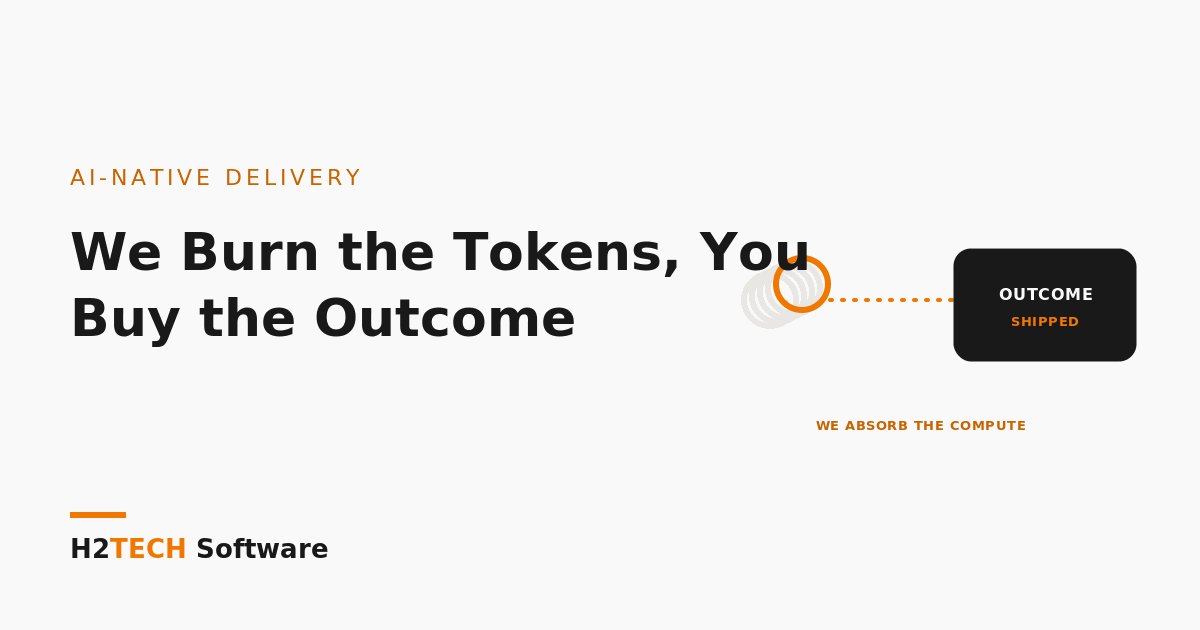
We flip the incentive. H2TECH absorbs the token and compute spend internally. You are priced on the outcome we agreed, not on how many tokens it took us to get there. If a workflow needs a hundred iterations to get right, that is our cost to carry, not yours.
That alignment changes behaviour on our side. Because experimentation is on our books, we are motivated to reach production quickly and cleanly rather than to bill the exploration.
Speed with governance, not speed instead of it
Agent-accelerated delivery is fast, but fast is only useful if it is also correct. Every output an agent produces on our projects is reviewed by a certified Salesforce engineer before it goes anywhere near your org. AI writes the first draft; a human who is accountable for security, testing, and governance signs it off.
The result is the speed benefit of AI-native delivery with the trust of engineered work. You buy a governed, production outcome, and the compute economics stay on our side of the line.
Key takeaways
- H2TECH absorbs AI token and compute cost; clients are priced on outcomes, not usage.
- Absorbing experimentation cost aligns the partner toward shipping, not billing exploration.
- Every AI output is reviewed by a certified Salesforce engineer before it reaches your org.